If you live or work in Australia, you would have probably heard of TFN (Tax File Number) and ABN (Australian Business Number) countless times and even heard people discussing their significance, similarities and why they’re needed in the first place. Issued by the Australian government, these two numbers are essential for taxation and business registration processes. Despite their importance, many individuals are still unsure about what the number stands for and which one to apply for.
This blog clearly explains what TFN and ABN are, helps you understand the differences between them, and shows how expert guidance can help you choose the right one for your needs.
What is a TFN?
Issued by the Australian Taxation Office (ATO), a TFN is a 9-or sometimes 8 digit permanent reference number that serves as an identity for individuals usually living in Australia. The TFN is primarily used in the tax and superannuation system. Not owning a TFN in Australia is okay until you start earning, because without a TFN
- You cannot apply for the government’s benefits and special allowances.
- You may not be eligible to lodge a tax return online.
- You cannot apply for an ABN, risking your limitations as a business or sole trader.
- Your employer may withhold a portion of your pay as taxes.
What is an ABN?
An ABN is an 11-digit unique number issued to businesses for their dealings with the public, government and other entities. Having an ABN is mandatory in Australia, for without this number you can’t register a business, claim GST or even set up a website domain. From small businesses to large corporations, every business needs an ABN, as it serves as the official identity of your business.
TFN or ABN: Which One Do You Need?
Now that you have got a clear idea of what a TFN and an ABN are, let’s discuss who needs what and how they can be applied for.
As stated, a TFN is mostly required by individuals living and earning in Australia and by people who deal with the Australian taxation system. Apart from this, you will need a TFN if you are,
- A student looking forward to the government benefits and allowances like Youth Allowance and Austudy.
- An employee, with a TFN you will have the right amount of tax is withheld from your pay.
- A sole trader or freelancer to report income earned through business activities. Many also use an accounting app to track invoices, expenses, and income accurately once their ABN is active.
- A superannuation account holder who tracks their contributions regularly.
Whereas, an ABN is required by individuals managing a business or planning to start a business. The following cases indicate where you will need an ABN.
- Any business, regardless of its size, to avoid having the highest tax withheld by other businesses.
- When you need to register for GST and claim credits.
- To operate as an independent contractor.
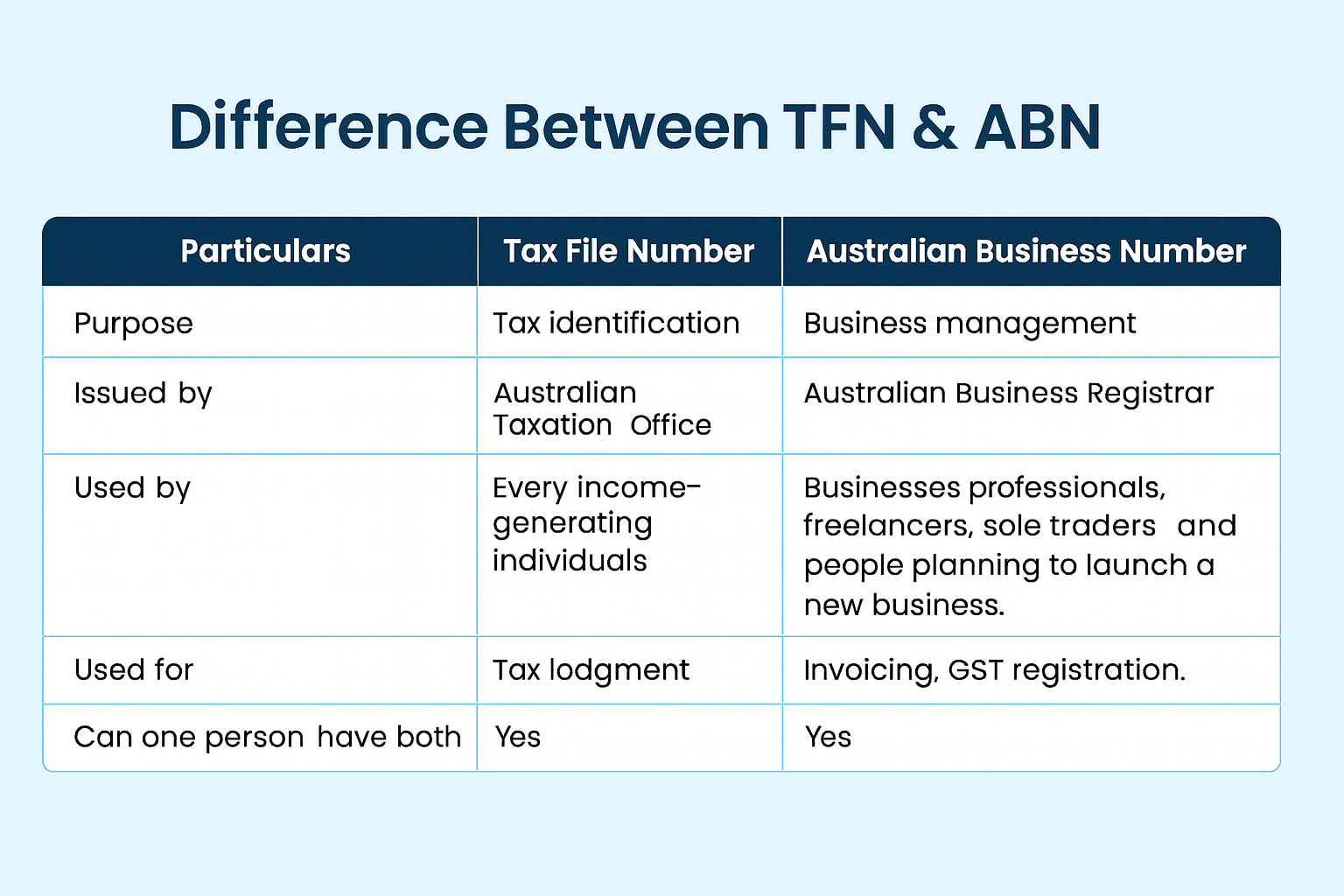
Overall, a TFN helps you with tax purposes, while an ABN supports your business endeavors.
Common Mistakes & Misconceptions between TFN & ABN
Even though a TFN and an ABN serve different purposes, many individuals still get confused between the two. Here are some of the most common misconceptions.
- Using a TFN or an ABN for every purpose, like tax lodgment, GST claims and launching a business. With both carrying a unique purpose, using one in place of another is neither legal nor acceptable.
- Thinking everyone needs an ABN, when it’s actually more required only for those planning to start a business or already managing one.
- Failing to keep your TFN or ABN information up to date can cause registration or audit issues and may delay access to government benefits or tax claims.
How To Apply for a TFN and an ABN
Before we analyse the major differences between the two, let’s understand how one has to apply for a TFN and an ABN.
- Applying for a TFN is a straightforward process with slight differences in the process for an Australian resident and a foreign passport holder.
Step 1: Visit the official Australian Taxation Office website.
Step 2: Fill the TFN form available under Individuals -> Apply for a TFN
Step 3: Verify your identity by providing documents like a passport, medicare card or driver’s license.
Step 4: Your TFN processing will start and you will receive your number within 28 days.
For foreign passport holders and permanent migrants, you can apply for a TFN with a valid visa once you arrive in Australia.
- To apply for an ABN, make sure you’re running or planning to start a business in Australia.
Step 1: Go to the Australian Business Registrar website.
Step 2: Fill out the application form with details like your business structure and personal details.
Step 3: Submit the application and wait for the official approval. Once approved, you will receive the ABN number within a few days.
Step 4: At regular intervals visit the ABR website and update your current business and personal details to stay away from audit and legal issues.
When you set up your company or trading trust with Accountants Direct we will apply for all registrations including ABN and TFN on your behalf.
Difference Between TFN & ABN
| Confused about TFN vs ABN? Let our experts guide you — call 1300 829 746 or schedule a quick consultation. |
Conclusion
The key to reducing your tax and succeeding in business lies in understanding Australia’s essential systems and identification processes. In Australia, two of the most important government-issued numbers for anyone living or working there are the TFN (Tax File Number) and the ABN (Australian Business Number). Getting expert guidance from professionals like Accountants Direct can help you understand the difference between the two and determine which one you need based on your situation. The professionals will also guide you with the application process, ensuring you save your time and stay compliant with the latest updates.
While a TFN and an ABN may seem complicated at first, each serves a unique purpose and plays an important role. Seeking assistance from experts can help clarify your doubts quickly and ensure you choose the right number for your needs.
Frequently Asked Questions
1. Can I have both a TFN and an ABN in Australia?
Yes. Many sole traders and freelancers use their TFN for personal tax and apply for an ABN to operate their business.
2. Do I need a TFN to get an ABN?
Yes, a TFN is generally required to apply for an ABN if you’re an individual or sole trader.
3. Is having an ABN enough for tax purposes?
No. You still need a TFN for your personal income tax. An ABN is specifically for business activities.
4. Can I work without a TFN or ABN in Australia?
You can, but your employer may withhold tax at the highest rate without a TFN, and operating without an ABN may result in similar issues for your business.
5. What happens if I lose my TFN or ABN?
You can recover them by contacting the ATO for your TFN or using the ABN Lookup tool on the ABR website.